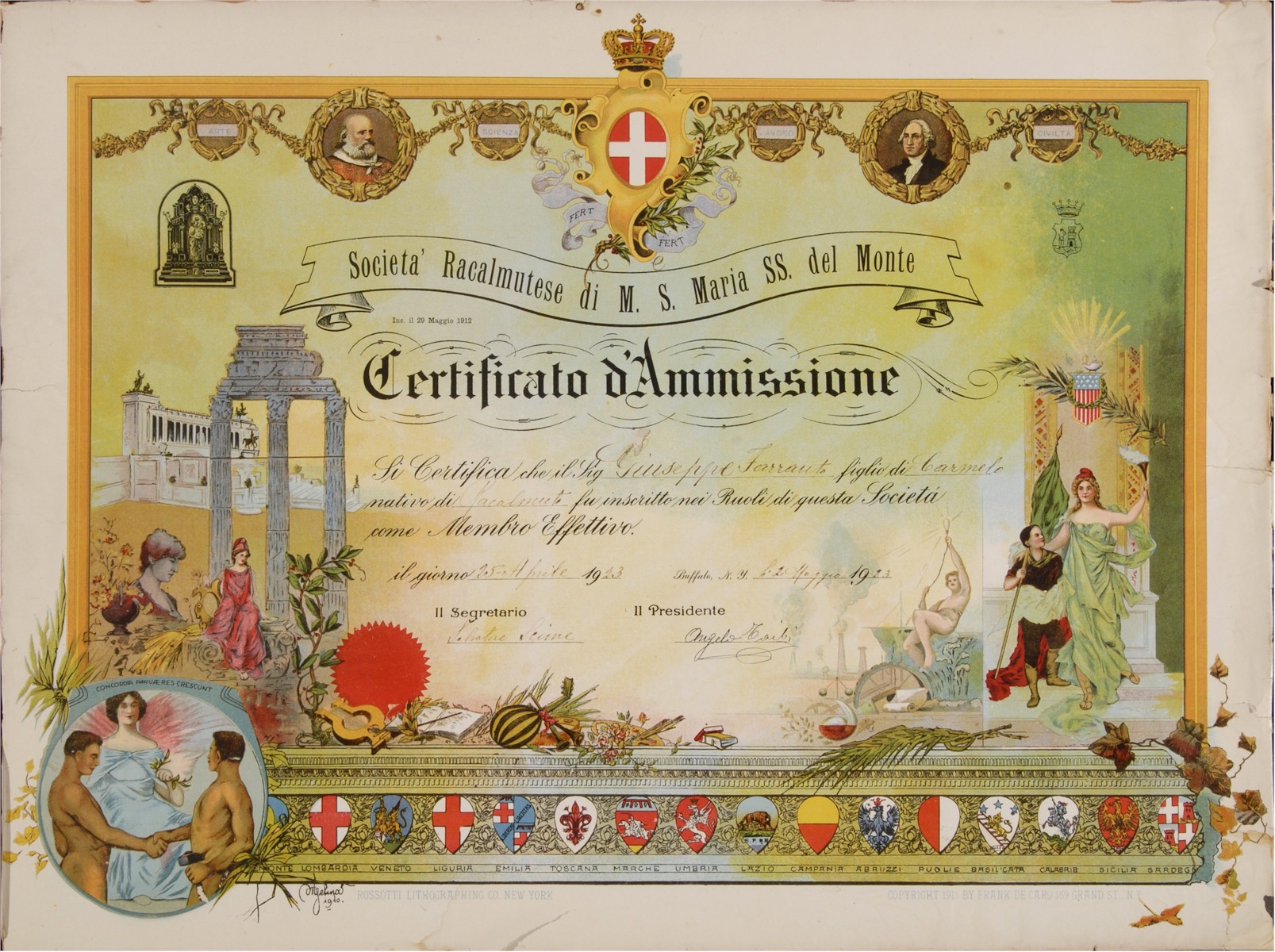
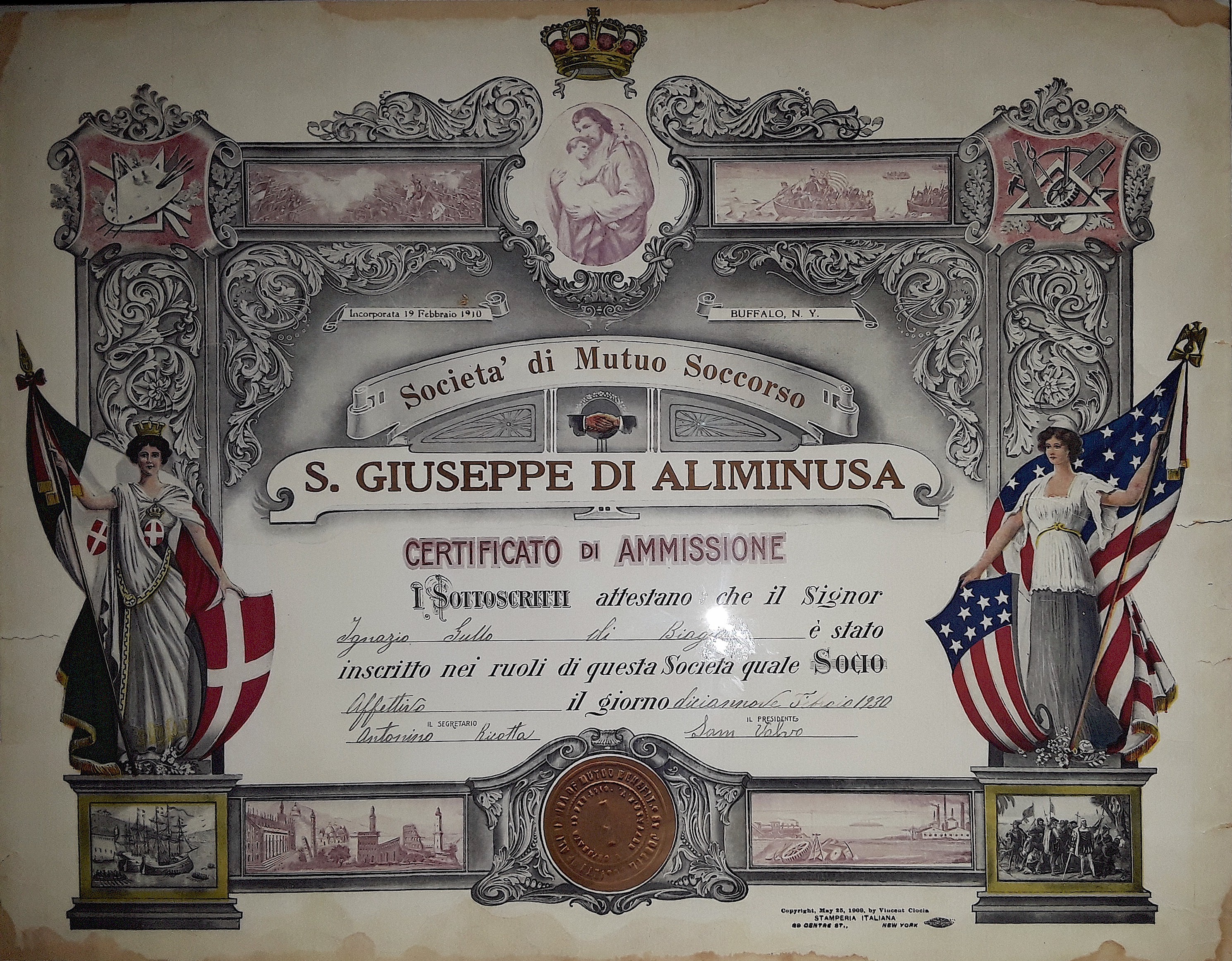
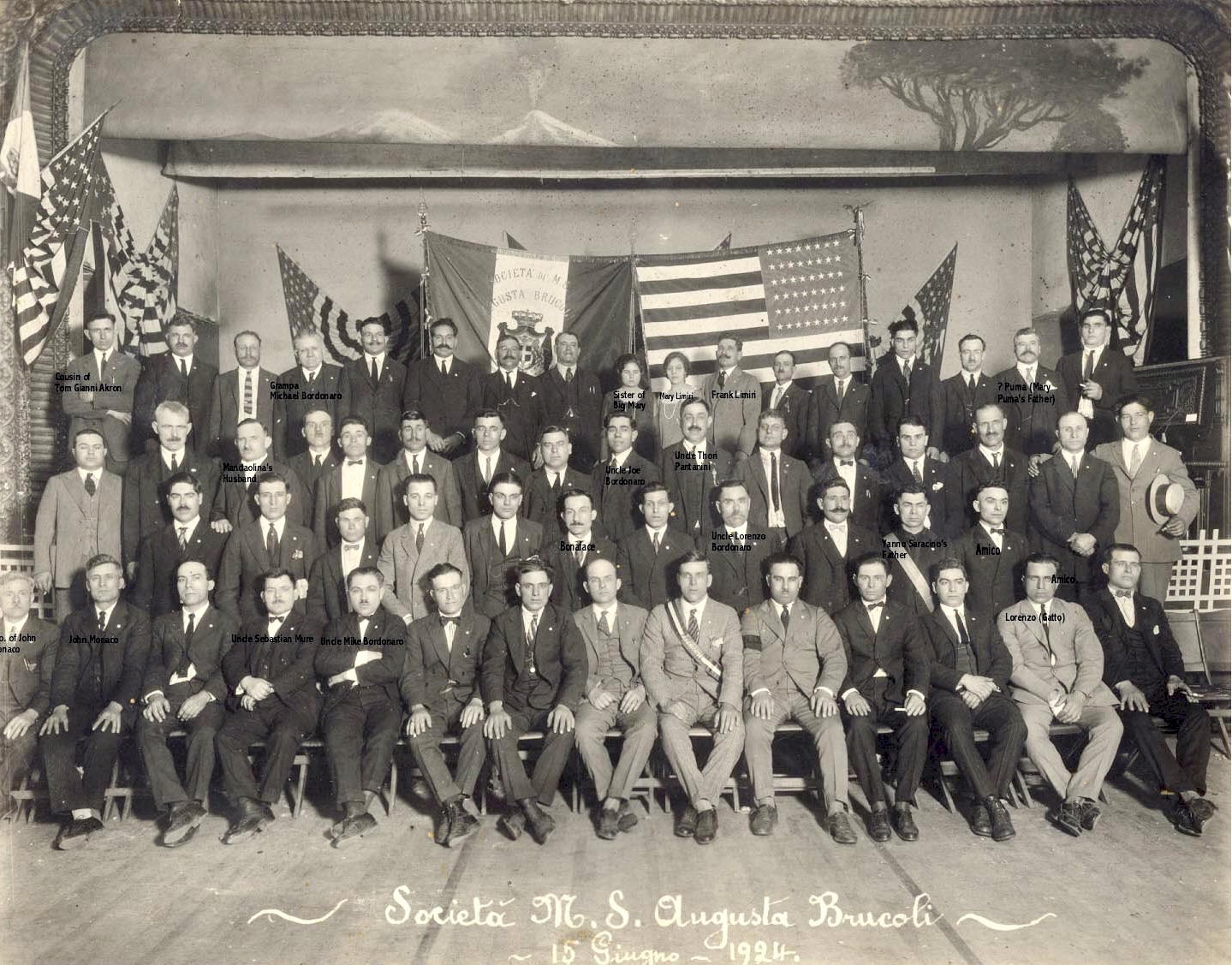
After the feudal system had essentially ended on mainland Europe, it continued in Sicily until the early 1800's. This was a system in which the "nobles"; Kings and Princes, had as vassals the Counts, Barons, Dukes and numerous lesser nobles on whom they conferred titles in return for loyalty and military support. The nobility were owners or landlords of "fiefs" on which peons, serfs, and sometimes slaves toiled for the "lord of the manor". Between the nobles and the serfs were classes of those who were professionals; doctors, lawyers, clerics, etc., and those artisans or guild members who had special arts or skills such as music or stonemasonry. When feudalism ended, many class distinctions remained. The former nobles, once vassals of a king, still kept track of their lineage and were "nobili", with titles like "signori" (lords); the lesser nobles, professionals and landowners were "galantuomini" (gentlemen) titled "Don"; the artisans became known as "civile" (citizens), often called "Mastro" or "Maestro" (master). And the former slaves, peons and serfs became the common people; the "contadini" (peasant farmers or sharecroppers), "villaci" (common villagers) and the "volgare" (commoners). For their own advancement, and to give themselves a sense of place, these "working classes" often formed "Società", or mutual aid societies, some specifically for workers, miners, and so on. These societies, which incidentally, were often strongly anti-Mafia, were viewed by the new government as attempts at socialism, and often they were banned. |
||||||
|
In the early
1800's the sulfur mines near Serradifalco, like others in Sicily, were
likely owned by the Baron who owned the town. When feudalism was
abolished, the mines were taken over by 'venture capitalists' who exploited
the poverty of the local peasants for cheap (sometimes slave-like) labor.
This was probably the situation in the late 1800's when many miners banded
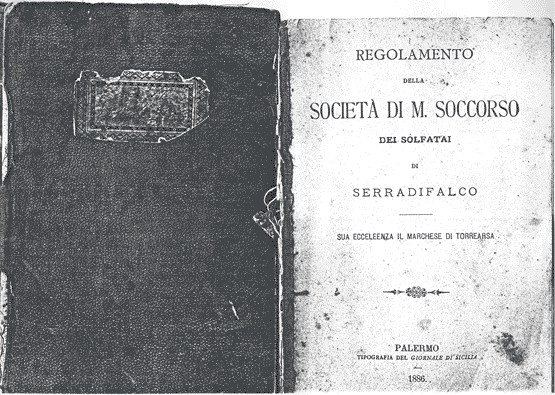
together to form the
Società di Mutuo Soccorso dei Solfatai in Serradifalco,
or the 'Society of
Mutual Aid of Sulfur Miners in Serradifalco'.
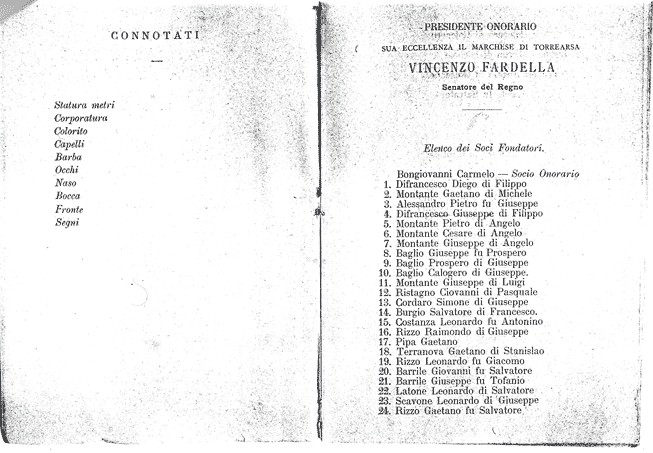
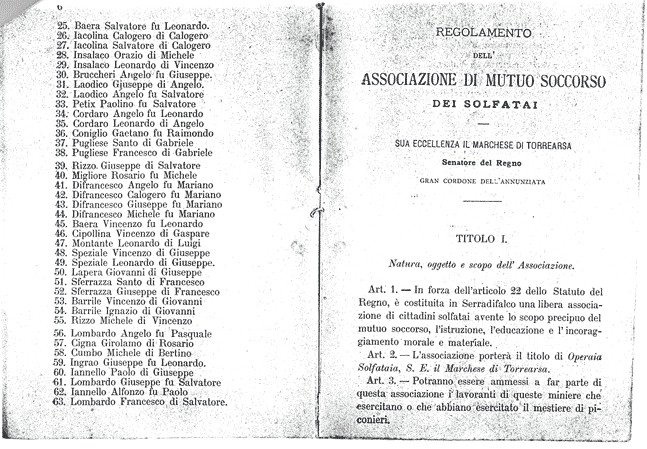
Below are the first three pages of the rules of the society, dated 1886, and
listing the founders of the organization. Click the images to enlarge
them. In the image on the right, line 36 reads: Coniglio Gaetano fu
Raimondo (Gaetano Coniglio, son of the late Raimondo Coniglio). These
are the names of my grandfather, born in Serradifalco in 1836, and his late
father
Raimondo,
born in about 1805. |
||||||
|
||||||
|
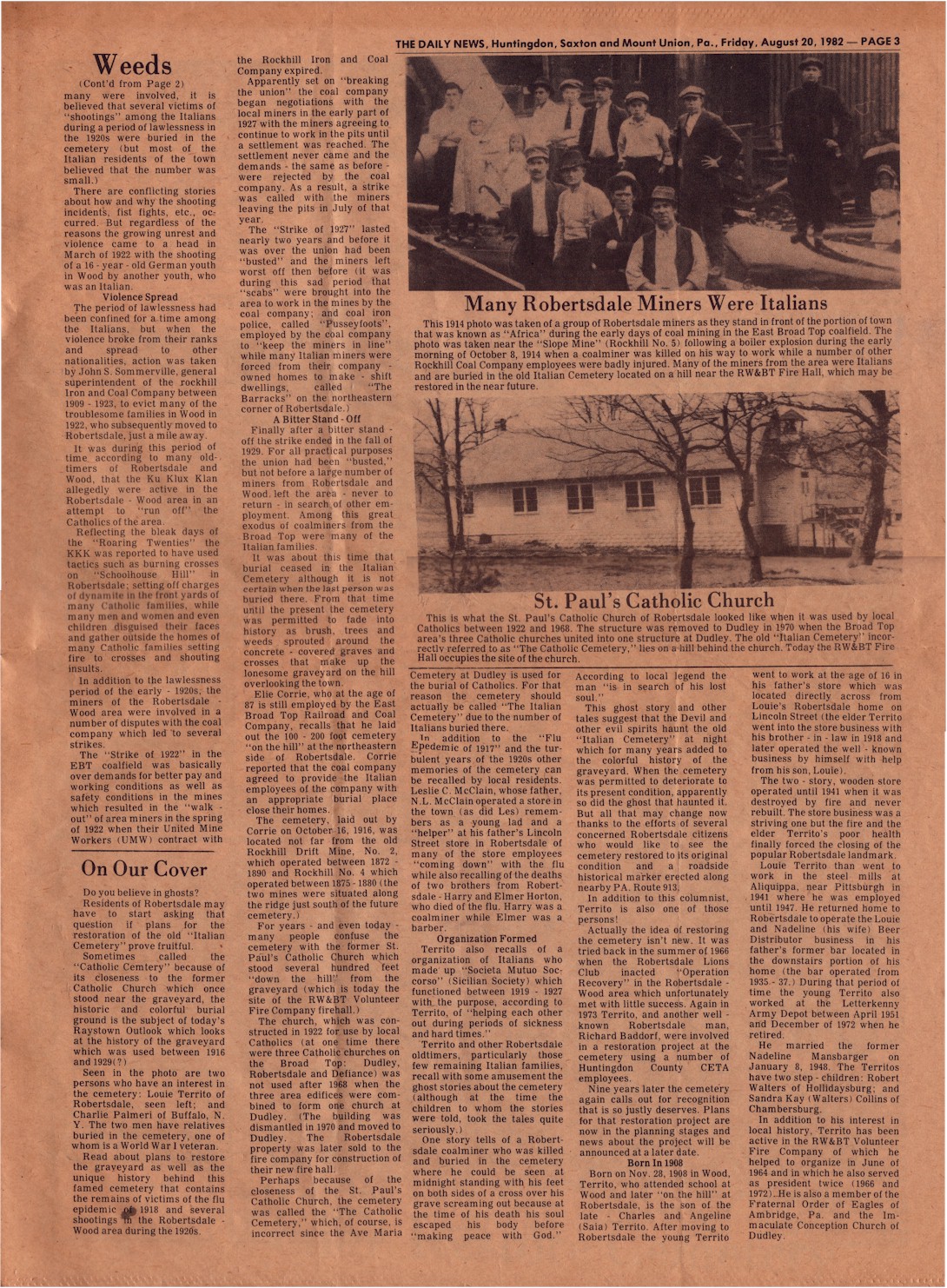
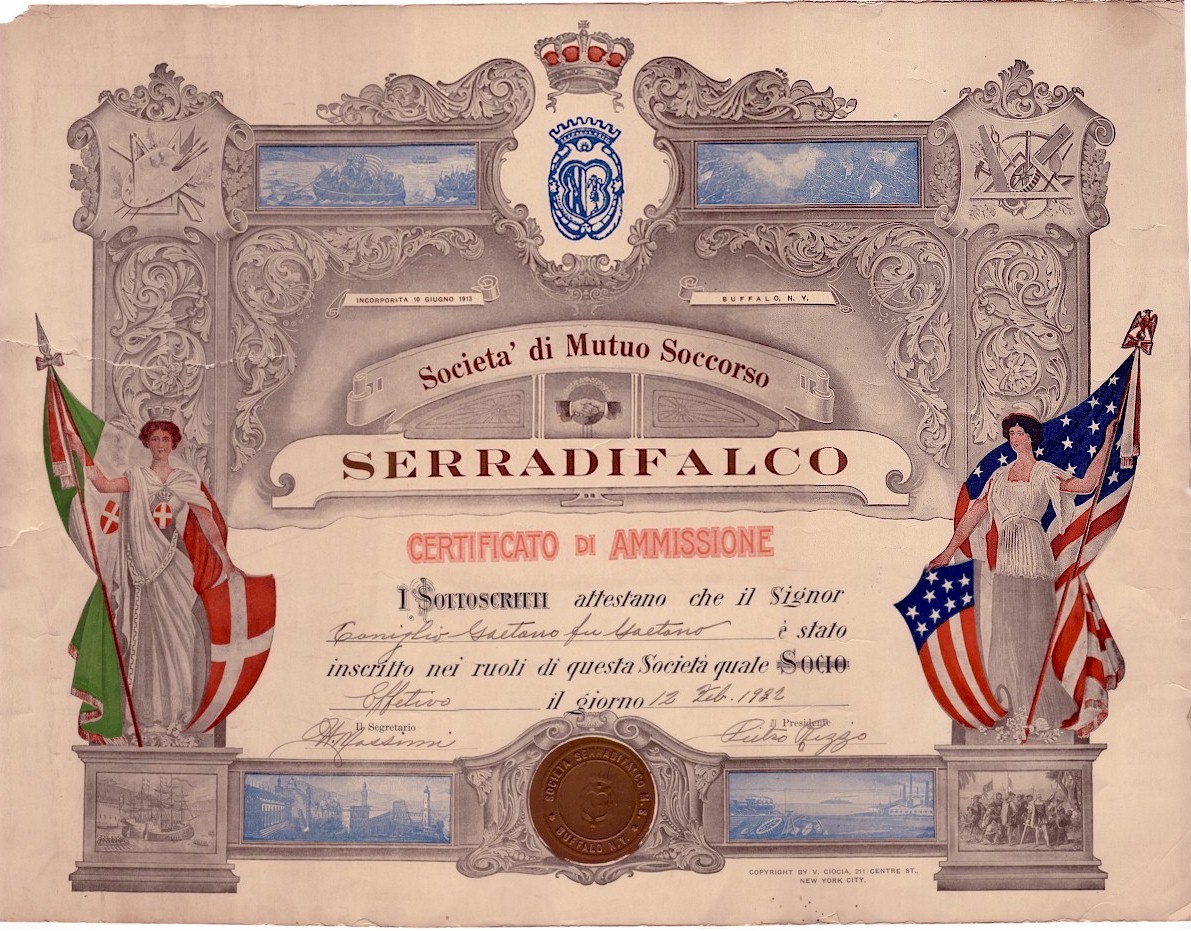
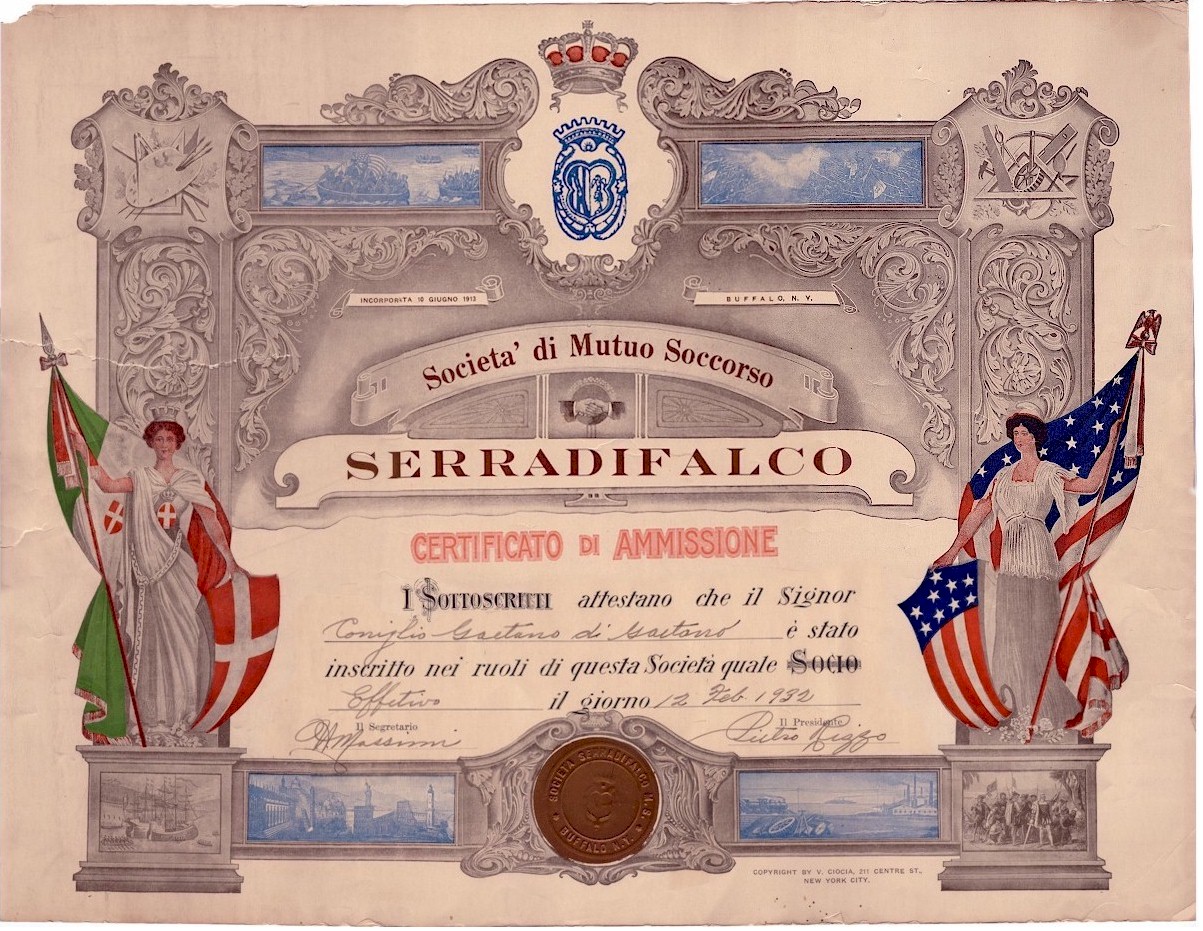
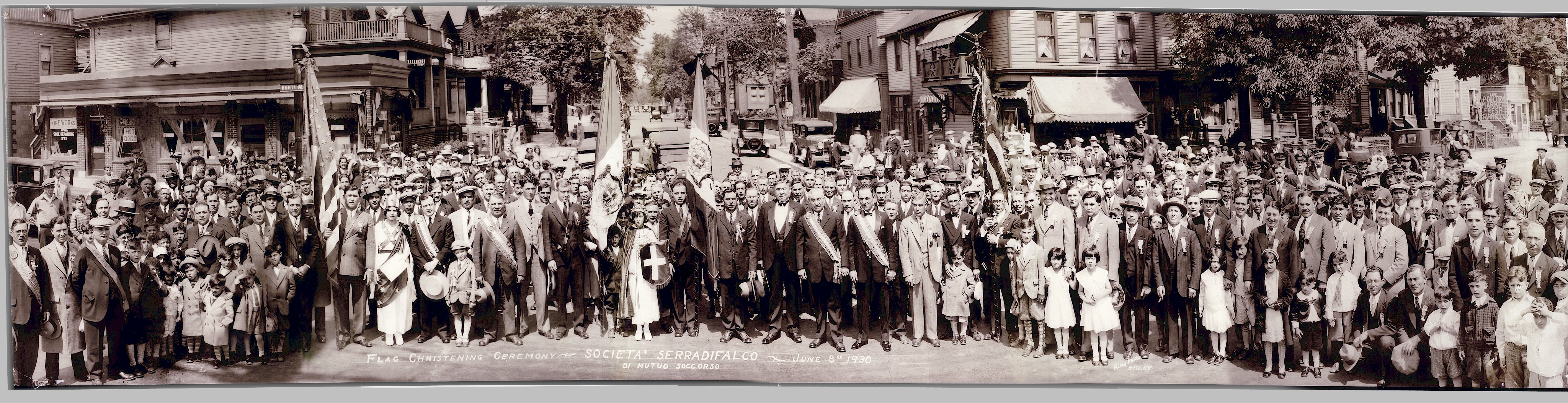
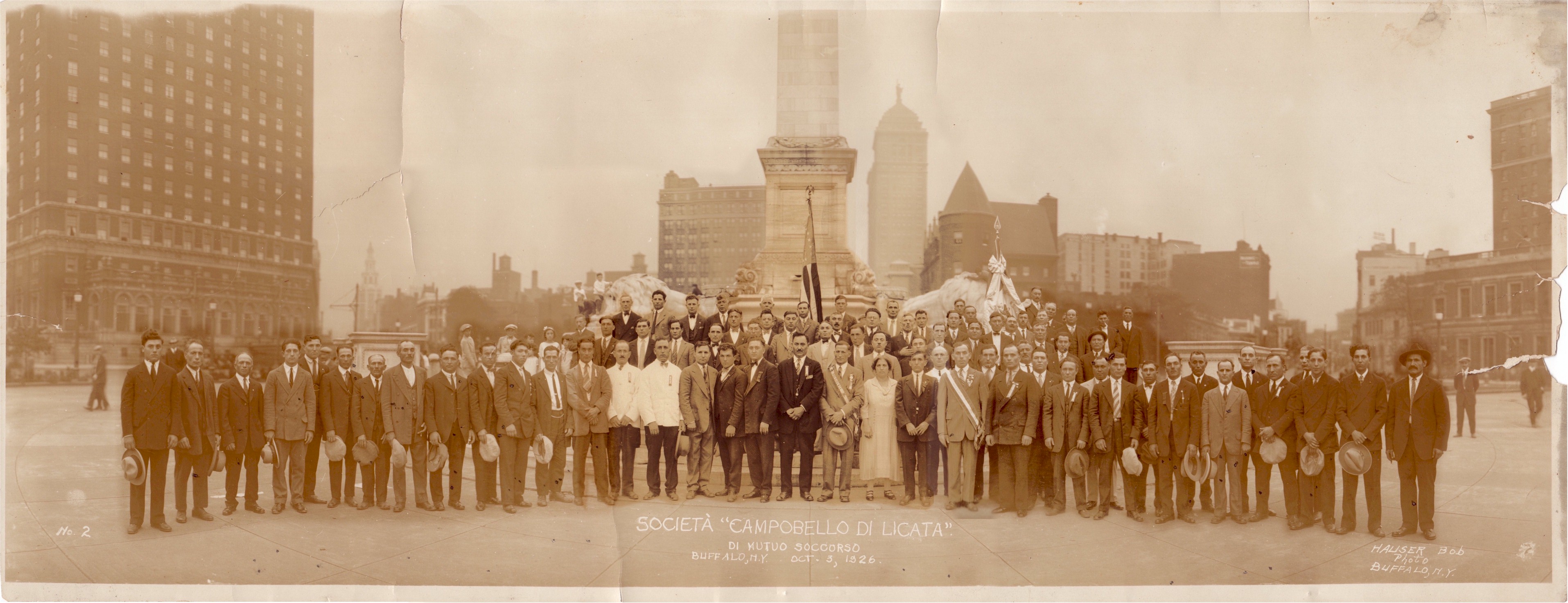
In America, immersed in unfamiliar
customs and still fearful of repression by the "ruling classes" (in this
case the coalmine owners), many Sicilian immigrants continued their
allegiance to
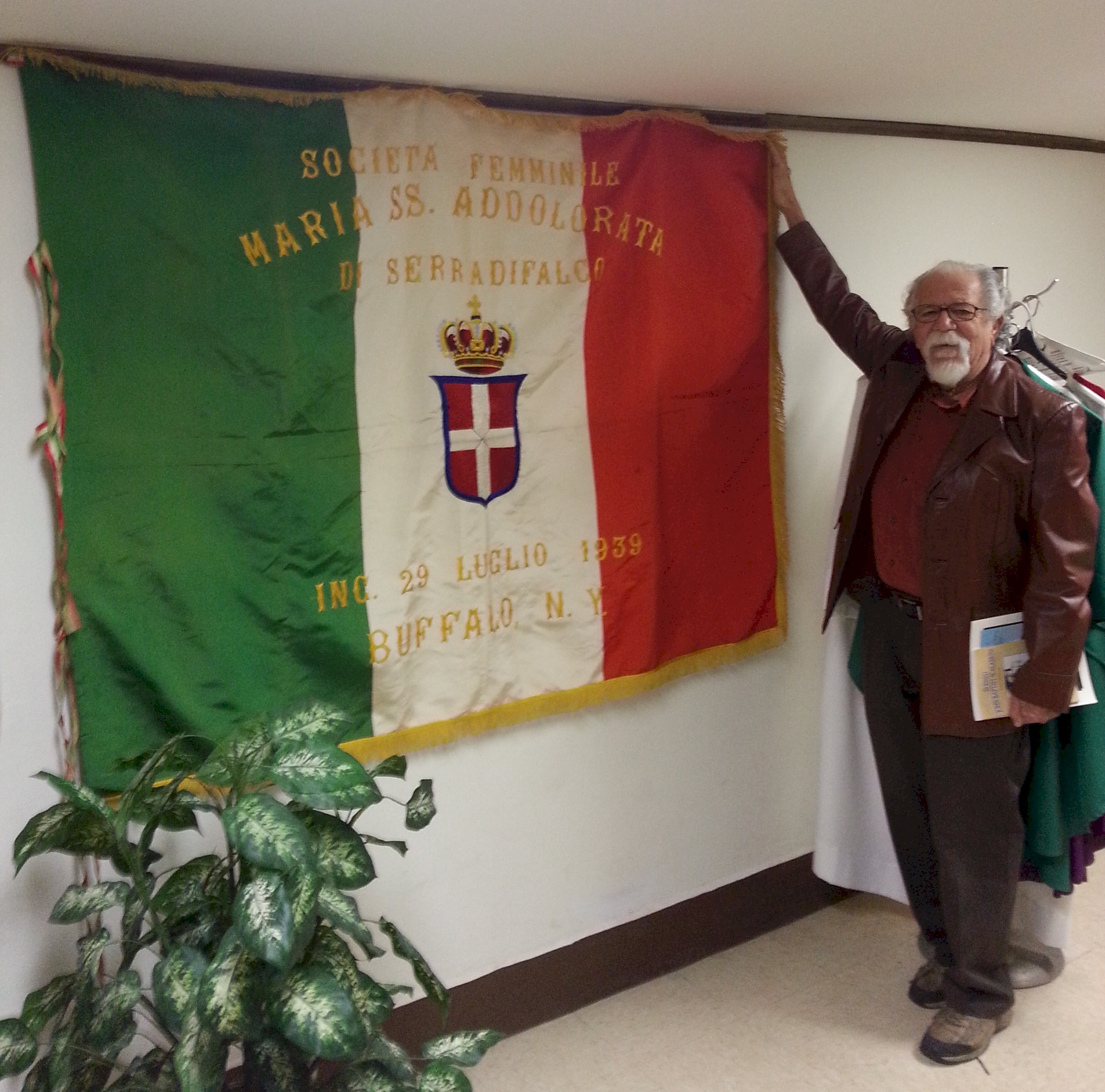
"societies" associated with their town of birth. One of these was the
Società Mutuo Accorso Serradifalco or
'Serradifalco
Mutual Aid Society'.
A chapter of the society was formed in Pittston, Pennsylvania, and it is
still active, sponsoring an annual feast for the Madre Addolorata (Our Lady
of Sorrows). There was also a branch of the Serradifalco society in
Roberstdale, Pennsylvania, and Gaetano, Rosa and Guy Jr. belonged to that
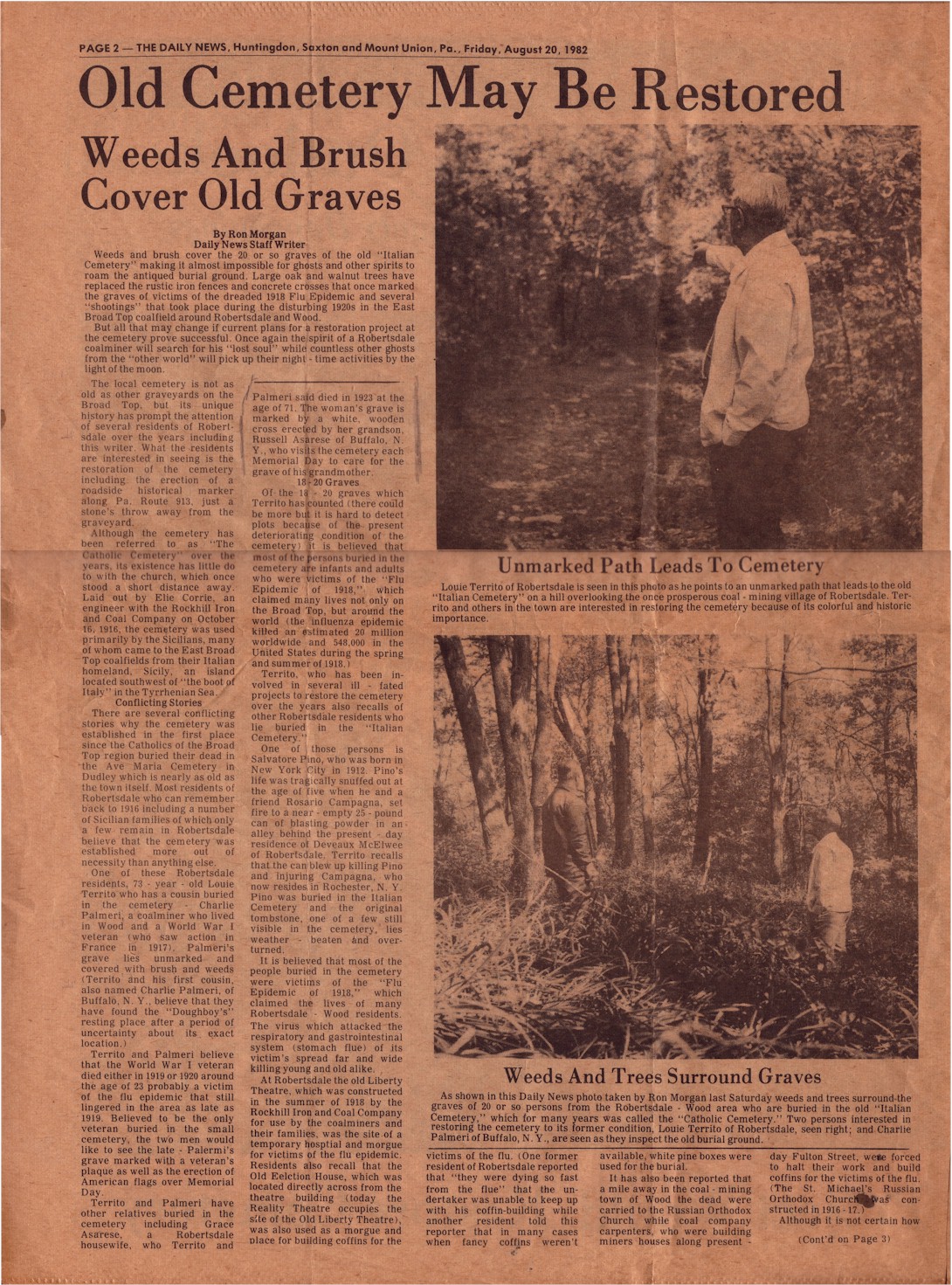
branch. When the bulk of Sicilians left Robertsdale, they left the society's flags and records with the (apparently)
only remaining Sicilian family in Robertsdale, the Territos.
|
||||||